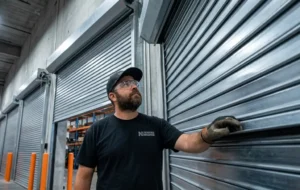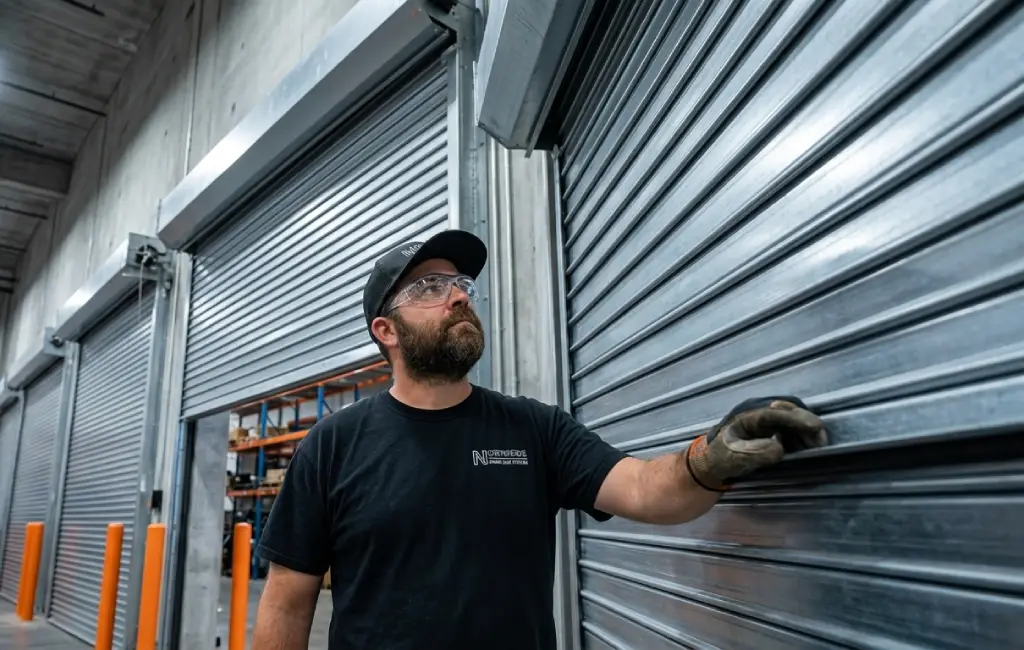
A commercial rolling steel door is built from horizontal interlocking steel slats that connect to form a flexible steel curtain. As the door opens, the curtain travels through guides on each side and coils around a barrel or drum above the opening.
Most commercial models use galvanized steel, although stainless steel and aluminum may be available for certain applications. The gauge, shape, finish, and construction of the slats depend on the required security, opening size, frequency of operation, insulation, and environmental conditions.
Rolling doors are commonly installed at:
- Warehouses and loading docks
- Distribution centers
- Manufacturing and industrial facilities
- Parking garage entrances
- Automotive facilities
- Retail receiving areas
- Self-storage facilities
- Maintenance buildings
- Service counters
- Large commercial openings
They work particularly well where ceiling space needs to stay clear for lighting, ductwork, sprinklers, storage racks, cranes, or other equipment.
Indianapolis facilities also have to deal with seasonal temperature changes, rain, snow, moisture, and outdoor exposure. For exterior openings, Midwest climate durability should be considered alongside basic security.
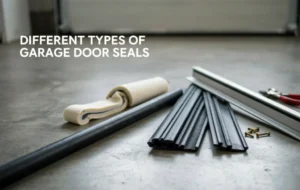
That may mean choosing galvanized steel, appropriate finishes, perimeter garage door weather seals, insulated steel doors, corrosion-resistant components, or doors engineered for the wind conditions affecting the building.
The terminology gets confusing because several names are used for similar products.
You may hear a contractor refer to the same general door category as:
- Rolling steel doors
- Commercial roll-up doors
- Coiling service doors
- Warehouse roll-up doors
- Rolling service doors
- Overhead coiling doors
- Commercial rolling doors
They are related terms, but individual products can be built for very different purposes.
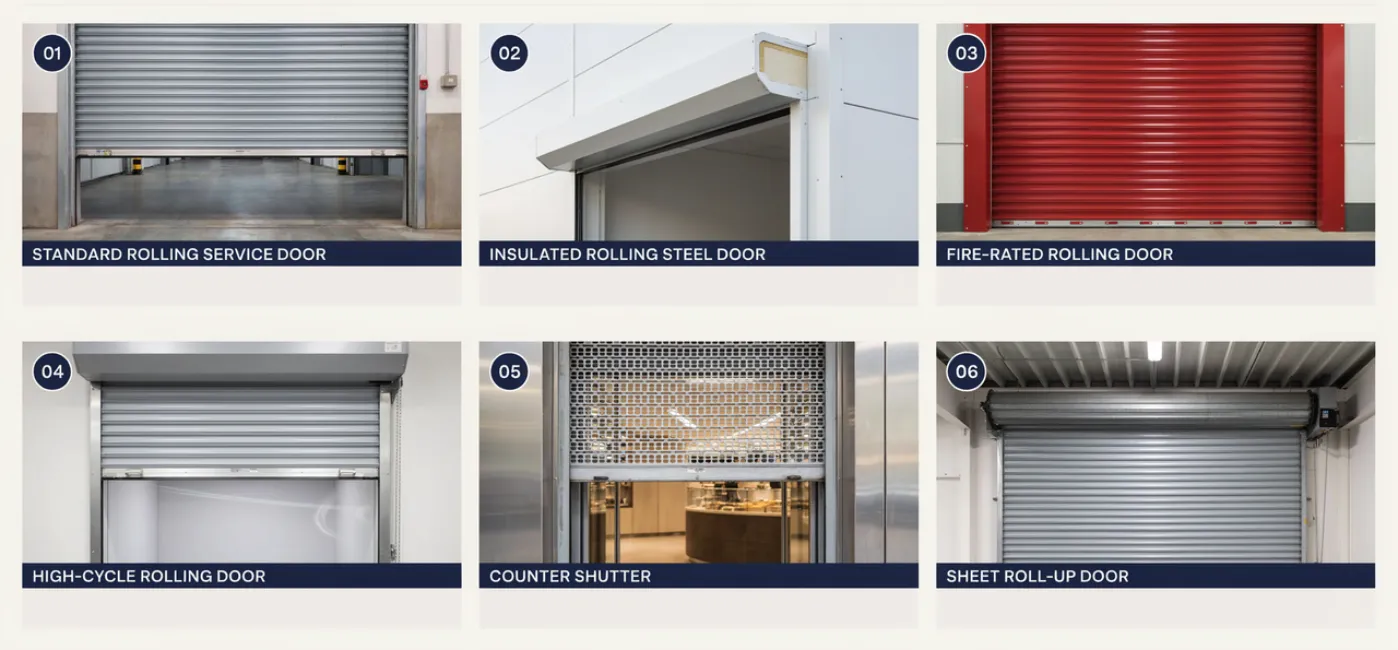
A standard rolling service door, for example, is normally used for general security and access control. It may be manually operated or motorized.
A fire-rated rolling door is different. It is designed and labeled for openings where a fire-rated assembly is required. Some commercial fire-door products are available with ratings of up to four hours, depending on the tested assembly and application.
An insulated rolling door uses insulated slats to reduce heat transfer through the opening. This can make sense for conditioned warehouses, production areas, service departments, or buildings where exterior doors stay closed for long periods.
A high cycle door is designed for frequent opening and closing. Standard commercial rolling doors may be enough for low or moderate use, while specialized high-performance doors can be rated for hundreds of thousands of cycles. One current industrial high-performance model, for example, is designed for 300,000 maintenance-free cycles.
Then there are counter shutters, which use similar rolling construction on smaller openings such as service counters, pharmacies, cafeterias, parts departments, and ticket windows.
The correct name matters when requesting a quote. Asking only for a “roll-up door” does not tell an installer enough about how the opening will actually be used. Northside Garage Door Systems can help Indianapolis commercial property owners identify the right door type, address existing problems quickly, and choose a practical repair or replacement solution that minimizes disruption to daily business operations.
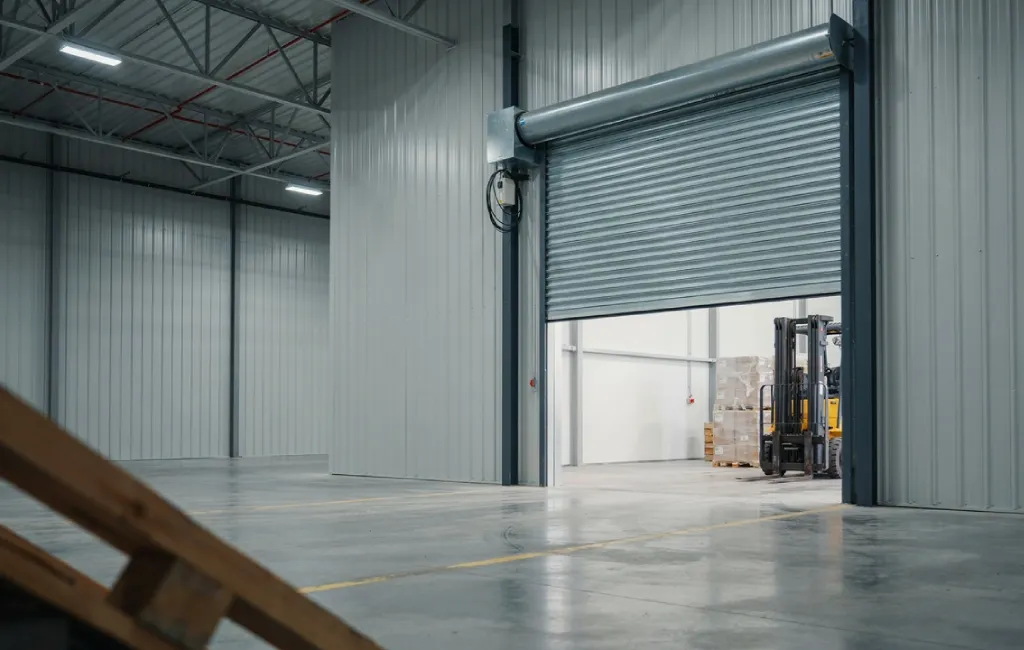
Key Benefits of Commercial Rolling Steel Doors for Warehouses
Below we will discuss in detail some of the benefits of using Commercial Rolling Steel Doors for Warehouses.
High Cycle Durability
Warehouses can put a lot of cycles on a door.
If forklifts, delivery vehicles, employees, or loading operations are moving through an opening throughout the day, the cycle rating becomes important. Door components that are acceptable for occasional operation may wear much faster in a high-traffic environment.
Standard rolling service doors and high-performance doors can have very different cycle capabilities. Some standard commercial rolling products are designed around approximately 50,000 cycles, while specialized high-performance systems can reach much higher ratings.
Do not select a warehouse door based only on its dimensions. Estimate how many times the opening actually operates per day.
Security and Impact Resistance
Steel construction gives commercial rolling doors a strong physical barrier across an opening.
The interlocking steel slats, side guides, bottom bar, locks, and curtain assembly work together. Depending on the application, heavier steel gauges and reinforced components may be appropriate for areas where security or impact exposure is higher.
Manually operated doors can also use slide locks or other locking systems. Some rolling service door systems include security locks specifically for this purpose.
For a rear warehouse entrance, equipment storage area, or street-facing commercial opening, these details deserve more attention than appearance alone.
Space Efficiency
One reason rolling doors work well in industrial buildings is simple: the curtain coils above the opening.
There are no long horizontal tracks extending across the ceiling like those found on many sectional doors.
That can help when a warehouse has:
- Tall storage racks
- Overhead utilities
- Sprinkler piping
- HVAC equipment
- Lighting
- Limited ceiling clearance
- Crane or material-handling equipment
A rolling design does require enough space for the curtain and drum, brackets, guides, and operator, so “space efficient” does not mean “no clearance required.”
For buildings with difficult conditions, minimal headroom doors or specially configured rolling systems may need to be considered during design.

Fire Protection
Some wall openings are part of a rated fire separation. A standard rolling steel door should not automatically be installed there.
A tested and labeled fire-rated rolling door may be required, depending on the wall assembly, occupancy, opening, and applicable code requirements.
The door assembly, closing mechanism, detector or alarm interface, installation method, and surrounding wall can all affect compliance. Fire doors are not something to specify by appearance.
Energy Efficiency
An uninsulated steel curtain offers limited thermal performance. If the opening separates conditioned indoor space from the exterior, an insulated model may make more sense.
Some insulated steel doors use insulated slats with materials such as polyurethane insulation. Performance varies considerably between models, so compare tested thermal data instead of assuming every insulated rolling door performs the same way.
For example, one current insulated rolling-door line lists an R-value of 6.24 for its insulated flat slats.
For Indianapolis buildings, insulation can be particularly relevant for exterior doors serving heated warehouses, maintenance shops, production areas, and other conditioned facilities.
Which Type of Rolling Steel Door Fits Your Building?
There is no single commercial rolling door that works for every warehouse. Start with what happens at the opening.
Northside Garage Door Systems offers free estimates to help Indianapolis business owners understand their options, compare pricing, and get practical recommendations for the right commercial rolling door based on their building, usage, and budget.
Standard Rolling Service Doors
These are suitable for many general commercial and industrial applications.
A typical coiling service door can be used at warehouse entrances, loading areas, service buildings, interior partitions, and other openings where basic durability and security are the main concerns.
Operation may be push-up, hand crank, chain hoist operation, or motorized depending on door size, weight, and usage. Manufacturers specifically offer different operators based on factors such as door size and operating frequency.
Insulated Rolling Steel Doors
Choose an insulated door when temperature control matters.
These can be useful for:
- Heated warehouses
- Climate-controlled storage
- Manufacturing facilities
- Exterior loading areas
- Automotive shops
- Food-related operations
- Buildings trying to reduce uncontrolled heat transfer
Remember that insulation garage door alone does not solve air leakage. Side, header, and bottom sealing also matter.
Fire-Rated Rolling Doors
Use fire-rated doors where the building design requires protection of a rated opening.
They are commonly used in fire barriers, service openings, interior separations, and other locations identified by the building’s approved plans or fire-protection design.
Never replace a rated rolling door with a standard service door simply because the dimensions match.
High-Cycle Rolling Doors
A high-cycle model makes more sense when the opening operates constantly.
A distribution building with forklifts crossing an opening throughout the day can accumulate cycles quickly. In that situation, higher-cycle components, stronger guides, appropriate operators, sensors, and maintenance planning can reduce downtime.
Counter Shutters
Counter shutters are intended for smaller openings rather than vehicle-sized warehouse entrances.
Typical applications include:
- Parts counters
- Service windows
- Cafeterias
- Pharmacies
- Retail service counters
- Industrial tool rooms
Commercial counter doors are available in materials including galvanized steel, aluminum, and stainless steel.
Sheet Roll-Up Doors
For some self-storage doors and mini-warehouse applications, a roll-up sheet door may be enough.
These are not the same construction as heavier interlocking-slat rolling service doors. Some commercial sheet doors use a continuous formed steel curtain rather than individually interlocking slats.
That difference matters when comparing price quotes.
What Factors Affect the Cost of a Commercial Roll-Up Door?
There is no useful flat price for every commercial roll-up door because the specifications can change significantly from one project to another.
The biggest cost factors usually include:
- Opening size: A large warehouse opening requires more curtain material, larger structural components, stronger brackets, and sometimes a heavier operator.
- Steel gauge: Heavier or specialized steel gauge doors may cost more but can be appropriate where higher durability or security is needed.
- Insulation: Insulated slats and enhanced perimeter seals increase initial cost.
- Cycle rating: A high-cycle system generally uses components intended for more frequent operation than a basic service door.
- Operation: Push-up operation is different from a chain hoist, hand crank, or electric motor operator.
- Controls and safety equipment: Photo eyes sensor, sensing edges, light curtains, key switches, remotes, access controls, and safety devices can change the final price.
- Fire rating: Fire-rated doors require tested assemblies and specific installation procedures.
- Wind load requirements: Large exterior doors may require additional engineering or reinforcement for wind load resistance.
- Material and finish: Galvanized steel may be standard on some products, while stainless steel, aluminum, powder coating, or custom finishes increase cost.
- Installation conditions: Installing on structural steel is different from a block wall installation, concrete wall, or framed wall. Access, wall condition, electrical work, equipment rental, and demolition of the existing door can affect labor.
Before comparing two quotes, make sure both contractors are quoting the same door specifications. A cheaper quote may simply contain a lighter door, lower cycle rating, manual operator, no insulation, or fewer safety features.
What is the Rough Opening for a Commercial Steel Door?
There is no universal rough opening for a commercial rolling steel door.
This is a common place for mistakes.
The required opening and installation clearances depend on:
- Door model
- Clear opening width
- Clear opening height
- Mounting method
- Guide configuration
- Barrel diameter
- Bracket size
- Operator location
- Headroom
- Side room
- Wall construction
Rolling doors may be installed on the face of a wall or, for certain assemblies, between jambs. Manufacturers offer both types on specific products.
So do not frame an opening based on a generic online chart and assume the door will fit.
The installer or manufacturer should confirm the finished opening dimensions plus required side room and headroom before fabrication.
This becomes even more important with concrete or block wall installation because changing the opening after construction is complete can become expensive.
Measure twice, but also check what is around the opening. Pipes, conduit, lights, sprinklers, steel beams, loading equipment, and electrical panels can interfere with the guides, drum, brackets, or motor operator even when the opening itself measures correctly.

Installation: What to Expect and What to Ask
Good installation starts before the door arrives. The contractor should inspect the opening, wall construction, mounting surfaces, available side room, headroom, electrical service, floor condition, and anything located around the opening. For larger warehouse roll-up doors, accurate field measurements are especially important.
Northside Garage Door Systems, a commercial garage door company serving Central Indiana, can help business owners through this process from the start. Their team can inspect the opening, take proper measurements, explain available door options, and answer questions about pricing, insulation, door size, operation, safety features, installation requirements, and maintenance.
If you are unsure which commercial rolling steel door is right for your warehouse or building, Northside Garage Door Systems can provide practical recommendations based on the opening, daily use, and budget.
Ask the installer:
What cycle rating are you specifying?
Give them realistic daily usage numbers. A door opening twice per day and one opening 80 times per day should not automatically receive the same hardware.
What steel gauge and slat profile are being used?
Do not accept “steel door” as the entire specification.
Is the door insulated?
If yes, ask for the actual thermal performance and sealing details.
How is it operated?
Push-up, chain hoist operation, crank, or electric operator?
What safety devices are included?
This matters especially for motorized doors operating around employees, vehicles, forklifts, and loading equipment.
What clearance does the door need?
Confirm side room, headroom, bracket space, and operator clearance before fabrication.
Is wind loading relevant?
Exterior doors and large commercial openings may need project-specific wind consideration.
Does the opening require a fire-rated door?
Do not wait until installation day to answer this.
Who handles electrical work and permits?
A motorized rolling door may require electrical coordination that is separate from the mechanical installation.
After installation, the door should move smoothly through the guides, stop correctly, close properly, and operate without unusual binding or excessive movement.
Motorized Rolling Steel Doors: Are They Worth It?
For many Indianapolis warehouses, yes. But not automatically.
A small storage door opened a few times a week may work perfectly well with manual operation. Adding a motor there may provide convenience without much operational benefit.
For a busy loading area, things change.
Motorized rolling doors can improve access and reduce the time employees spend manually operating large or heavy doors. They also allow integration with controls such as push buttons, key switches, remotes, access-control systems, and other activation devices.
Operator selection needs to match the application.
Some manufacturers distinguish between medium-duty operators for doors operating fewer times per day and heavier-duty operators intended for larger or more frequently cycled doors.
For a high-traffic opening, think beyond the motor itself.
Consider:
- Daily cycles
- Opening speed
- Door weight
- Vehicle traffic
- Forklift traffic
- Safety sensors
- Emergency operation
- Access controls
- Electrical availability
- Maintenance requirements
A motorized door with the wrong operator is not a good upgrade. The operator, controls, curtain, guides, and cycle requirements should be selected as one system.
Frequently Asked Questions (FAQs)
What is the best rolling steel door for a warehouse?
It depends on the opening and usage. Standard rolling service doors work for many general warehouse applications. High-traffic openings may need a high cycle door, conditioned buildings may benefit from insulated steel doors, and rated wall openings may require fire-rated rolling doors.
Are rolling steel doors good for loading docks?
Yes. Loading dock doors can benefit from the security, vertical operation, durability, and space efficiency of rolling steel construction. The correct cycle rating and operating method should be selected based on how frequently the dock is used.
Can commercial rolling doors be insulated?
Yes. Insulated rolling doors use insulated slats to improve thermal performance. Polyurethane insulation and other insulation systems are available depending on the manufacturer and model. Weather seals should also be considered because insulation alone does not stop air leakage around the door.
Can a rolling steel door be installed on a block wall?
Often, yes, provided the selected door and attachment system are appropriate for the wall construction. Block wall installation should be evaluated before the door is ordered so that anchors, mounting surfaces, clearances, and structural requirements can be confirmed.
Are rolling steel doors suitable for parking garages?
Yes. Parking garage doors frequently use rolling or high-performance door systems because they provide security without requiring horizontal ceiling tracks. High cycle durability can become especially important where vehicles enter and exit throughout the day.
Should an Indianapolis warehouse use an insulated rolling door?
For an exterior opening into conditioned space, insulation can be worth considering. Indianapolis buildings experience both heating and cooling seasons, so insulated slats and effective perimeter seals may reduce unwanted heat transfer and air movement compared with a basic uninsulated curtain.
What should I know before ordering a commercial rolling steel door in Indianapolis?
Know the finished opening size, wall construction, available headroom and side room, daily cycle count, interior or exterior location, insulation needs, desired operation, security requirements, and whether the opening has a fire rating. For large commercial openings, also confirm structural and wind requirements.
Conclusion
Getting those details right before fabrication is much easier than correcting them after a custom rolling door arrives at the building.
If you are not sure which commercial rolling steel door is the best fit for your warehouse or building, Northside Garage Door Systems can help evaluate your opening, daily usage, operating needs, insulation requirements, and budget before recommending the right garage door system. The company serves commercial customers across Central Indiana and offers commercial door installation, repair, and maintenance services.
For questions or a free estimate, contact Northside Garage Door Systems at 317-575-0983 or email contact@northsidegaragedoors.com.