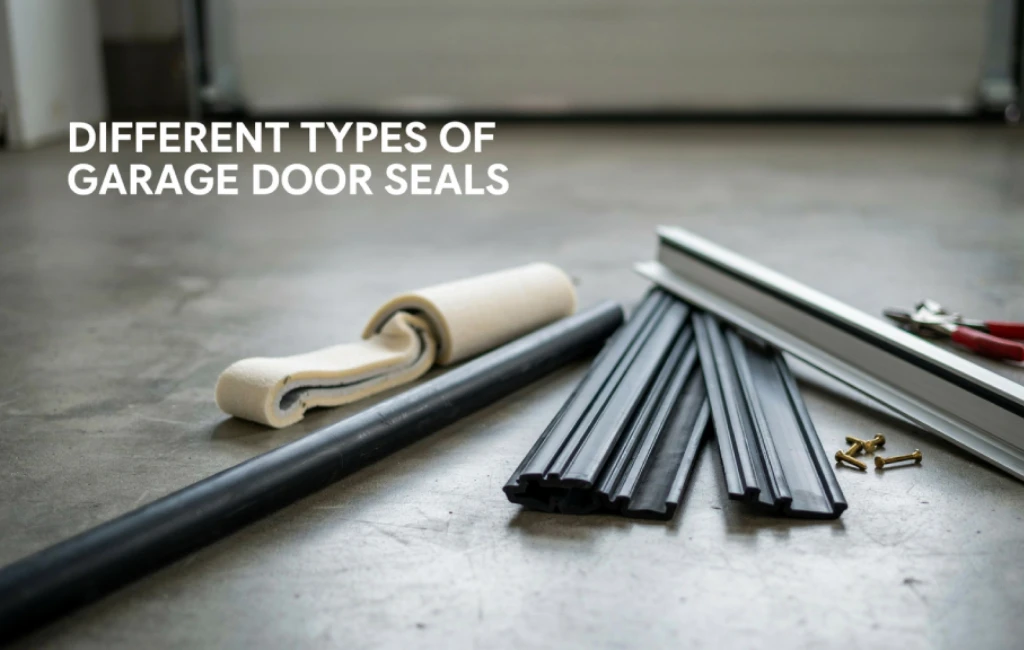
If you own a garage in Central Indiana, you already know the weather here does not mess around. One week it is 90 degrees and humid, the next you are scraping ice off the driveway. That kind of swing is hard on a garage door, and the part that takes the worst of it is the seal. Not the door itself, not the opener, the seal. It is rubber or vinyl sitting at ground level, getting run over by weather, road salt, mower clippings, and whatever else blows into the driveway.
This article walks through the different types of garage door seals, what each one actually does, and how to tell when yours needs replacing. We will also cover installation basics, common mistakes, and why this small strip of material has a bigger impact on your energy bill than most people assume.
A garage door seal is not decorative. It is weatherstripping, plain and simple, and it does the same job as the strip around your front door or windows. When it wears out, you lose the barrier between your garage and the outside world. That means drafts, water intrusion, dust, and in some cases, pests looking for a way in.
For homes around Indianapolis, Carmel, Fishers, and the rest of Central Indiana, the seasonal swing from humid summers to freezing winters puts extra stress on these materials. Rubber and vinyl expand and contract with temperature. Over years of that cycle, they crack, flatten, or pull away from the door. Once that happens, the seal cannot do its job anymore.
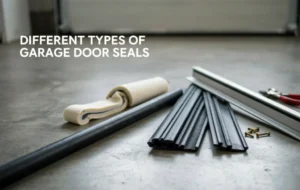
Garage Door Bottom Seals: The Main Types
The bottom seal is the piece most people think of first, and for good reason. It sits between the door and the garage floor and takes the brunt of the weather, debris, and floor irregularities.
Bulb Bottom Seal (Astragal)
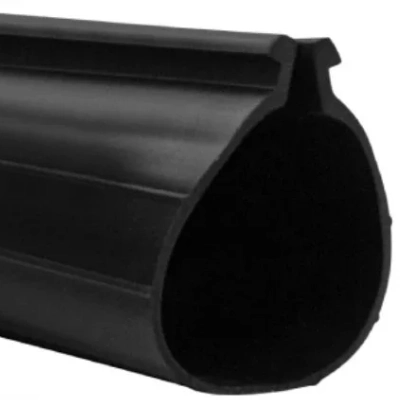
The bulb seal, sometimes called an astragal, is shaped like a rounded tube. Picture an inverted T from the side. It is made of flexible rubber or vinyl attached to a rigid retainer, usually aluminum or PVC, and it flattens against the concrete when the door closes. This flattening is called seal compression, and it is what creates the tight barrier against water and air.
Bulb seals hold up well in extreme heat and extreme cold, which matters here since Central Indiana sees both in the same calendar year. They are also relatively easy to install compared to some other types, and they come in a range of sizes to match different door thicknesses and floor gaps.
T-Type and Beaded Bottom Seals
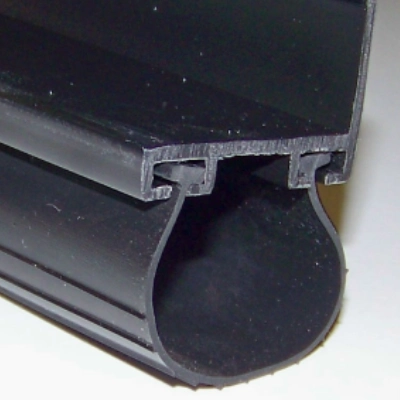
T-type and beaded seals both use a double channel retainer, and both form a T-shape on either side when viewed from the end. Beaded seals have circular grooves that lock into the retainer track. These styles are common on doors with double track retainers rather than the single track setup used for bulb seals. They work fine for most residential applications, but they are a little less forgiving on uneven concrete than a bulb seal.
J-Type Bottom Seal
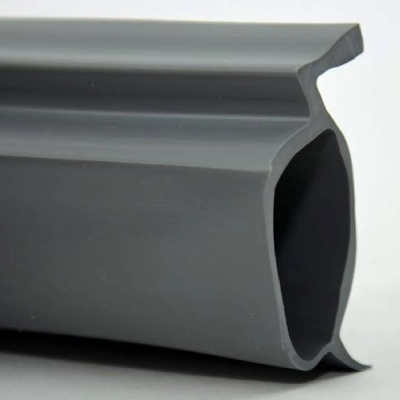
The J-type seal uses a single-track retainer, and when the door closes, it forms two J shapes side by side. This design is common on older garage doors and is generally straightforward to replace, though it is worth checking your retainer style before ordering a replacement since J-type and bulb seals are not always interchangeable.
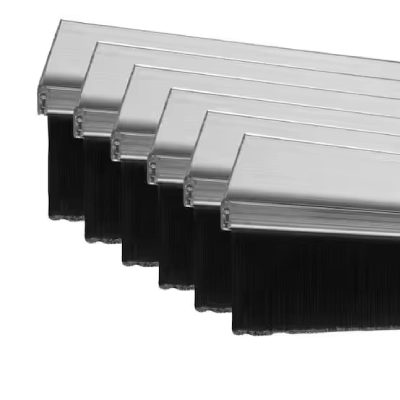
Brush Bottom Seal
Brush seals are different from the rest. Instead of a solid strip of rubber or vinyl, you get flexible bristles mounted to a metal or plastic backing. They create a barrier against drafts, dust, and pests without dragging against the floor, which makes them a good option for garage floors that are uneven or sloped toward a driveway.
Brush seals are commonly rated around 98.5% effective at sealing gaps, and they hold up well in both heat and cold. They are used a lot in commercial and industrial settings, but they work on residential doors too, especially where floor irregularities have made other seal types wear out fast.
Beyond the Bottom Seal: Full Weatherstripping Systems
A bottom seal alone will not fully weatherproof a garage door. There are other seals that cover the sides, top, and panels.
Side seals and top seals (top caps) attach to the door jambs and header. They close the gap where the door meets the frame on the sides and top. Top seals work especially well paired with a door stop seal, since the combination blocks drafts from two directions at once.
Door stop seals run along the sides and top of the frame. They serve two jobs: sealing out the elements, and giving the door opening a cleaner, finished look. Door stops come in different colors so they can match the door or the trim around it.
Threshold seals attach directly to the concrete floor with an adhesive, forming a raised lip that the door closes against. These are the fix for two very specific complaints: water coming in under the door during heavy rain, and daylight visible along the floor line when the door is shut. Threshold seals are a good option when your garage floor has settled unevenly or slopes toward the door.
Reverse angle mount seals attach to the angle iron used to mount garage door track, mostly seen in metal buildings or industrial-style garages. When installing one, the angle needs to point in toward the building, not out, or it will not seal correctly.
Panel weatherstripping is a V-shaped, self-adhesive strip placed between individual door panels. It is mostly relevant on older wood garage doors that do not have interlocking panel edges. Most modern doors interlock already, so this is less common on newer installs.
Signs Your Seal Needs Replacing
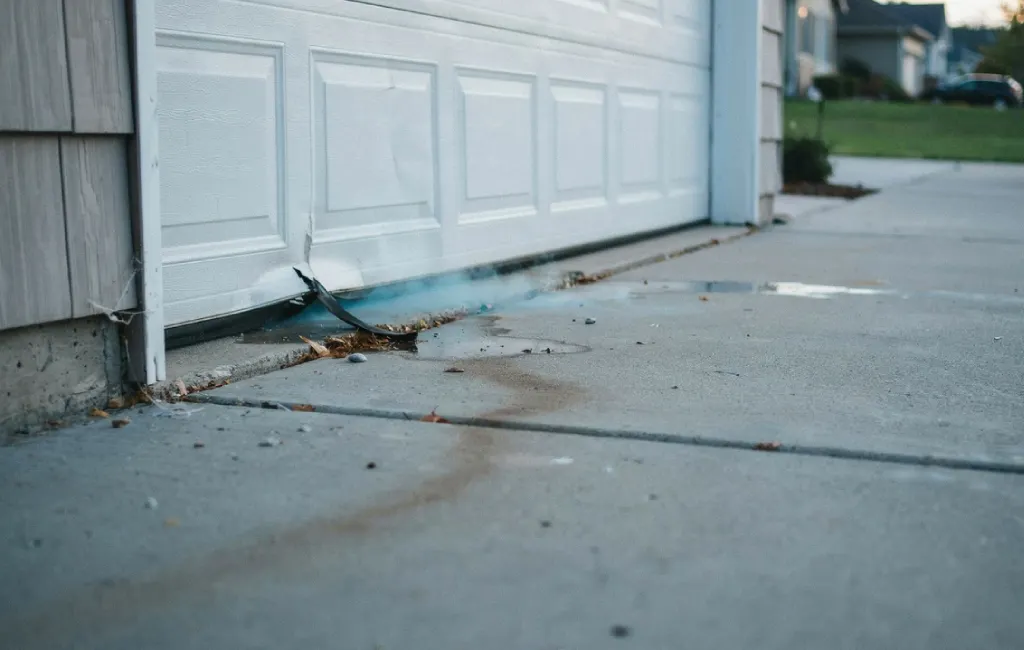
Garage door bottom seals generally need replacement every five to ten years, though that range shifts a lot depending on sun exposure, temperature swings, and how much the door gets used. Watch for:
- Cracking, flattening, or hardening of the rubber or vinyl
- Discoloration from UV exposure
- Loosening or detachment from the retainer track
- Gaps or irregular sections along the seal
- Visible daylight under the closed door
- A noticeable breeze coming through when the door is shut
If you are standing in your closed garage and can see a sliver of daylight at the bottom, that is not a minor cosmetic issue. That is an open path for water, cold air, and pests.
How Northside Garage Door Systems Can Help You
If any of this sounds like your garage, daylight under the door, water after a storm, a draft you can feel standing next to the wall, Northside Garage Door Systems can take a look and tell you exactly what is going on. We serve homeowners across Central Indiana and deal with this kind of wear every week, so we know which seal type fits which door, floor condition, and climate exposure.

Our technicians can inspect your current seal, retainer track, and door alignment, then recommend a replacement that actually matches your situation instead of a one-size-fits-all fix. We handle the full process, from removing the old seal to installing and testing the new one, and we can advise on maintenance so the next seal lasts as long as it should. If your garage door has never had its weatherstripping looked at, or it has been more than five years, it is worth a quick inspection before the next big temperature swing hits.
Give us a call at (317) 575-0983 or Book Now to get your garage door seal inspected or replaced.
Frequently Asked Questions (FAQs)
How often should I replace my garage door bottom seal?
Most bottom seals last five to ten years, but that depends on sun exposure, temperature swings, and door use. Homes with south or west-facing garages in Central Indiana often see faster wear due to UV exposure and repeated freeze-thaw cycles.
What is the difference between a bulb seal and a J-type seal?
A bulb seal is rounded and used in a single track retainer, forming a tight compression seal when the door closes. A J-type seal is also single-track but forms two J-shapes rather than a rounded bulb. Bulb seals generally handle uneven floors and temperature extremes a bit better.
Can I install a garage door seal myself?
Yes, though it goes easier with two people. The process involves removing the old seal, cleaning and lubricating the retainer track, feeding the new seal through, cutting it to size, and securing it. Mistakes like cutting the seal too short or ignoring floor irregularities are common, so take your time or call a professional if you are unsure.
Why do I feel a draft even though my garage door looks closed properly?
A worn or hardened bottom seal, gaps in the side or top seals, or a door stop that has pulled away from the frame can all let air through even when the door appears shut. Cracking, flattening, and loosening are the usual culprits.
Do garage door seals actually affect my energy bill?
Yes. An attached garage with a poor seal lets outside temperatures affect the shared wall with your house, forcing your HVAC system to work harder. Sealing gaps at the bottom, sides, and top of the door is one of the more affordable ways to reduce that energy loss.
Conclusion
Your garage door seal takes more abuse from Central Indiana weather than any other part of the door, so it needs regular attention, not a one-time install. Picking the right seal type for your floor, retainer, and sun exposure makes the difference between it lasting two years or ten. A quick inspection now costs a lot less than dealing with water damage, pests, or a higher energy bill later.